This post is also available in: Español (Spanish)
Drying clothes indoors is completely normal, especially in winter, on rainy days, or when you don’t have a balcony, garden, outdoor line, or tumble dryer. The problem starts when your freshly washed clothes end up smelling musty, damp, or just “not quite clean” after drying inside.
And no, it is not always your detergent. In many cases, the issue comes from how you dry clothes indoors, where you place them, how much airflow there is, how close the garments are together, and how long they stay damp.
The good news is that there are ways to dry clothes indoors without that bad smell, even if you don’t own a dryer and have no option to dry laundry outside.
In this guide, we’ll explain how to dry clothes indoors without smell, what mistakes most people make, how to avoid excess moisture, and what you can do to help your laundry dry properly and stay fresh.
Contents
- Why clothes smell bad when drying indoors
- 7 reasons indoor-dried clothes smell damp
- How to dry clothes indoors properly step by step
- The best place in your home to dry laundry
- Common mistakes when drying clothes indoors
- How to dry clothes faster indoors without a dryer
- How to dry different types of clothing properly
- How to avoid extra moisture in your home
- When you should wash the clothes again
- Frequently asked questions
Why clothes smell bad when drying indoors
When clothes dry badly, the real issue is simple: they stay damp for too long. And when fabric remains wet for hours in a closed or poorly ventilated room, bacteria and unpleasant odours can start to develop.
Sometimes the smell is not obvious straight away. You may only notice it when wearing the clothes, ironing them, or taking them out of the wardrobe later. Other times it is obvious immediately: a hoodie, towel, or T-shirt comes off the drying rack and already smells wrong.
Usually, the cause is not just one thing but a combination of several factors:
- the clothes came out of the washing machine too wet
- they were hung too close together
- the room had poor ventilation
- there was too much moisture in the air
- the washing machine itself had an odour issue
- the clothes were put away before being fully dry
If this happens regularly, it may also be worth checking whether your washing machine is part of the problem.
7 reasons indoor-dried clothes smell damp
To dry clothes properly indoors, you first need to understand what causes the smell. These are the main factors.
1. Poor airflow
This is one of the biggest causes. If your laundry dries in a closed room with no fresh air or circulation, moisture stays trapped and drying takes much longer.
2. Overloading the drying rack
When clothes are packed too tightly together, air cannot move between them properly. That means slower drying and a higher chance of a damp smell.
3. Not enough spin in the washing machine
If your clothes come out dripping or very wet, you are already making drying harder than it needs to be.
4. Drying thick fabrics without enough space
Towels, jeans, hoodies, bedding, and heavier fabrics need more airflow and more room than lighter clothes.
5. Excess moisture in the home
If your home already struggles with condensation or dampness, laundry will absorb that environment quickly.
6. Putting clothes away too soon
This is one of the most common mistakes. Clothes may feel dry on the surface but still be damp around seams, cuffs, waistbands, or thicker sections.
7. Existing washing issues
If the clothes already smell strange when they come out of the washing machine, indoor drying will only make it more noticeable.
How to dry clothes indoors properly step by step
If you want your clothes to dry indoors without that musty smell, it helps to follow a simple but effective process.
Step 1: Take clothes out of the washing machine as soon as the cycle ends
Do not leave wet laundry sitting inside the drum for hours. The longer it stays there, the more likely it is to start smelling unpleasant.
Step 2: Shake out each garment before hanging it
This small step makes a bigger difference than most people realise. Shaking out your clothes helps:
- open up the fabric
- reduce wrinkles
- separate folded or stuck areas
- improve airflow around the garment
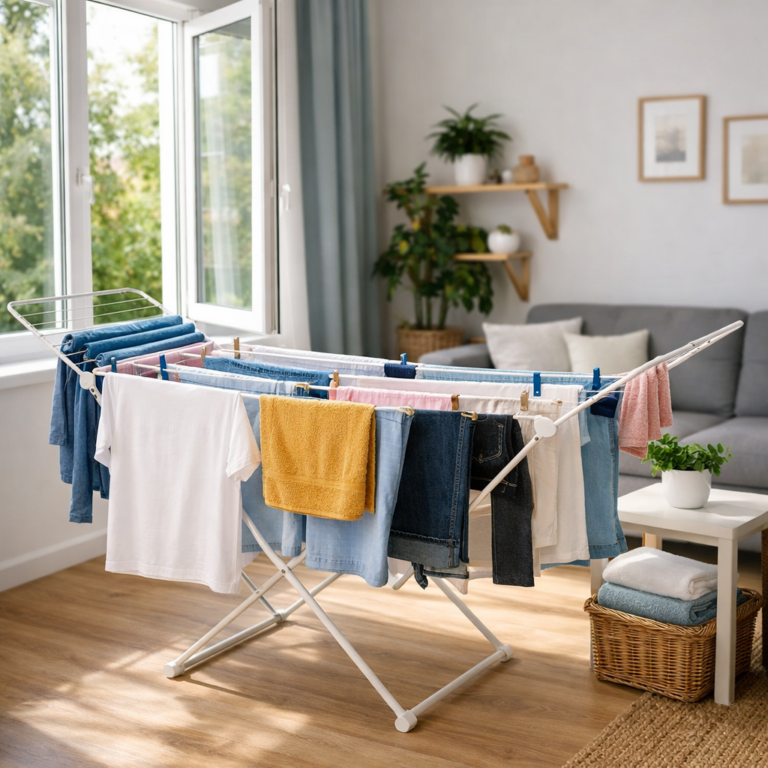
Step 3: Leave real space between clothes
Your drying rack should not look “packed full”. If everything is touching, drying will be much slower and less effective.
Try to:
- alternate heavy and light items
- avoid placing several thick items together
- leave space for air to move between pieces
If needed, it is better to dry in two smaller loads than one overcrowded one.
Step 4: Choose the right room
Not every room in the house is equally good for drying laundry. A bright room with a window and some air movement works much better than a damp bathroom or a dark hallway.
Step 5: Create airflow
Air movement dries clothes more effectively than heat alone.
If possible:
- open a window
- leave a door open to create airflow
- place the drying rack somewhere with natural circulation
Step 6: Turn or reposition heavier garments if needed
Some clothes dry unevenly. It often helps to adjust them after a few hours, especially for:
- jeans
- hoodies
- towels
- bedding
Step 7: Do not put anything away until it is fully dry
This is crucial. Always check the areas that stay damp the longest:
- seams
- waistbands
- cuffs
- collars
- hems
- underarms
- hoods
If any of these still feel cool or slightly damp, the item is not ready to be stored.
The best place in your home to dry laundry
There is no one perfect answer for every home, but some places are definitely better than others.
The best indoor drying spots are usually:
- a room with a window
- somewhere with cross-ventilation
- a bright, dry space
The worst places are usually:
- a bathroom with poor ventilation
- small closed rooms
- dark hallways with no airflow
- areas that already have damp or mould issues
The key question is not just “Where does the rack fit?” but “Where does air move best?”
Common mistakes when drying clothes indoors
These are the habits that quietly ruin indoor drying.
Leaving laundry in a pile before hanging it
If you leave your wet washing in a heap on the bed or sofa for an hour before hanging it, you are already creating a moisture problem.
Hanging clothes folded or bunched up
Any garment that is folded over or scrunched up will take far longer to dry properly.
Not separating heavy and light fabrics
A thick wet towel next to several T-shirts affects how everything dries.
Drying clothes in a cold, closed room
It may seem like they will “eventually dry”, but the longer they stay damp, the more likely they are to smell.
Putting clothes away when they are “almost dry”
This is one of the biggest reasons people end up with musty-smelling wardrobes and drawers.
Using too much detergent
Excess detergent can leave residue in the fabric, which can trap smells and make slow drying worse.
How to dry clothes faster indoors without a dryer
You do not need a tumble dryer to speed up drying. A few small changes can make a big difference.
1. Use an effective spin cycle
One of the best ways to improve indoor drying starts before you even hang the clothes up. The less water they hold, the faster they dry.
2. Prioritise the thickest items
If you have limited drying space, hang the items that take longest first:
- towels
- hoodies
- jeans
- bedding
3. Place the drying rack where air moves
Airflow matters more than many people think. A gentle current can make a huge difference.
4. Do not push the drying rack against a wall
Leave some space around it so air can circulate on both sides.
5. Use hangers for some garments
Shirts, blouses, dresses, and lighter tops often dry better on hangers because they keep their shape and expose more surface area.
6. Spread out heavier garments
Do not cluster all your thick items together on one side of the rack.
7. Use the driest part of the day
If you can choose, it is usually better to dry laundry during the day than late at night.
How to dry different types of clothing properly
Not all clothes dry in the same way. Here are some practical tips by fabric type.
T-shirts and lightweight clothing
These usually dry well indoors if they are hung properly with enough spacing.
Jeans
They take longer to dry, especially around seams and waistbands. Give them more time than you think they need.
Hoodies and sweatshirts
Hoods, cuffs, and thicker fabric sections often stay damp longest.
Underwear and socks
These dry quickly, but only if they are not trapped under or between larger items.
Towels
Towels are one of the worst fabrics for absorbing bad smells if they dry too slowly.
Bedding
Sheets and duvet covers can dry indoors, but they need to be spread out properly and not folded over too much.
How to avoid extra moisture in your home
Drying laundry indoors does not just affect your clothes. It can also affect the air and surfaces in your home if you do it badly.
Every wet load of laundry releases a surprising amount of moisture into the room. If that moisture builds up, it can lead to:
- foggy windows
- stale-smelling rooms
- cold damp walls
- musty wardrobes
- mould in corners or around windows
To reduce the impact:
Ventilate while the laundry is drying
You do not need the windows wide open all day, but fresh air matters.
Do not dry multiple wet loads in one small room
Too much moisture in too little space creates the perfect conditions for problems.
Avoid drying clothes in an already damp bathroom
This is one of the most common mistakes and usually makes everything worse.
Pay attention to problem areas in your home
If a room already has condensation, mould, or stale smells, it should not be your main drying space.
When you should wash the clothes again
Sometimes a garment can be saved just by airing it out properly or giving it longer to dry. Other times, it honestly needs washing again.
You should probably rewash it if:
- it still smells clearly bad once dry
- it stayed damp for too many hours
- it sat in the washing machine too long
- the smell gets worse after ironing or storing
On the other hand, if the smell is only very mild and the garment is otherwise clean, it may be enough to:
- air it out properly
- let it dry longer
- improve the airflow around it
Extra indoor drying tips that really help
To finish, here are some simple habits that genuinely make indoor drying easier and more effective:
- do smaller laundry loads if your drying space is limited
- avoid mixing too many thick fabrics in one load
- hang clothes as soon as possible after washing
- leave proper space between garments
- choose the driest and best-ventilated room available
- always check seams and thicker areas before storing clothes
- avoid using damp rooms as your drying space
Conclusion
Drying clothes indoors without that damp smell is absolutely possible, but it requires a bit more strategy than simply hanging everything up and hoping for the best.
If you improve airflow, space out your laundry, choose the right room, and make sure everything is genuinely dry before storing it, you will notice a huge difference.
The key idea is simple: clothes should not just look dry — they need to be properly dry.
Once you understand that, most of the problem disappears.
Frequently asked questions
Why do clothes smell bad when drying indoors?
Usually because they stay damp for too long in a room with poor airflow.
Where is the best place to dry clothes indoors?
A bright, well-ventilated room with some airflow is usually best.
How can I dry clothes faster indoors without a dryer?
Use a good spin cycle, leave space between garments, and dry them somewhere with moving air.
Is it bad to dry clothes in the bathroom?
Only if the bathroom is already humid or poorly ventilated, which often makes drying slower and smell worse.
How do I know if clothes are fully dry?
Check seams, cuffs, collars, waistbands, and thicker areas, not just the surface.
Which clothes are most likely to smell when dried indoors?
Towels, hoodies, jeans, bedding, and heavier fabrics tend to be the most problematic.
Should I wash clothes again if they smell damp?
If the smell is strong or persistent, yes. If it is only mild, better airflow and extra drying time may be enough.